

Clear aligners are generally worn for 20–22 hours a day, including while you sleep. Invisalign’s manufacturer, Align Technology, advises 20–22 hours of daily wear, while the American Association of Orthodontists (AAO) generally recommends at least 22 hours. Your treating dentist’s prescribed schedule should always take priority.
If you’re wondering how long to wear Invisalign per day, the practical answer is simple: keep your aligners in throughout the day and night, removing them only for meals, drinks other than plain water, and oral hygiene.
The challenge is not usually understanding the rules. It’s fitting meals, work, school, and everyday activities into a consistent routine.
This guide explains how to manage your daily wear time, recognize when your aligners aren’t fitting properly, and respond if you’ve accidentally left them out longer than planned.
20 vs 22 Hours: What Your Daily Target Means
Most Invisalign patients are advised to wear their aligners for 20–22 hours daily, while the AAO recommends at least 22 hours for many clear-aligner treatment plans. Wearing them consistently helps maintain the controlled forces needed for planned tooth movement.
The American Association of Orthodontists explains that clear aligners gradually reposition teeth using gentle pressure. Because the trays are removable, the patient must wear them as directed for treatment to work as planned.
Similarly, Invisalign wear-time guidance recommends 20–22 hours per day for typical Invisalign treatment.
Your prescribed daily target determines how much removal time you have:
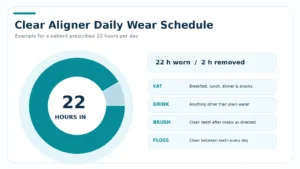
- 22 hours of wear: Up to 2 hours out of your mouth.
- 21 hours of wear: Up to 3 hours out of your mouth.
- 20 hours of wear: Up to 4 hours out of your mouth.
These are daily totals, not separate allowances for each meal. A patient instructed to wear aligners for 22 hours should not routinely use the full two-hour removal window.
How Much Time Can You Leave Clear Aligners Out?
Your removal time is usually limited to two to four hours per day, depending on your prescribed wear schedule. This includes time spent eating, drinking anything other than plain water, brushing, and flossing.
Remove your aligners for:
- Breakfast, lunch, dinner, and snacks.
- Coffee, tea, juice, soda, and other drinks besides plain water.
- Brushing and flossing.
- Cleaning your aligners.
It’s easy to underestimate how quickly these short breaks accumulate.
For example, a 30-minute breakfast, 45-minute lunch, 45-minute dinner, and two 15-minute snack breaks add up to two and a half hours without aligners.
That would leave 21.5 hours of wear, which is below a 22-hour prescription.
Do You Need to Wear Invisalign While Sleeping?
Yes. Overnight wear is normally necessary to meet the prescribed 20–22 hours of daily Invisalign use. Removing aligners for an entire night can significantly reduce the amount of time they apply pressure to your teeth.
Align Technology specifically includes sleeping hours in its overnight aligner guidance.
Make putting your aligners back in part of your bedtime routine, just as you would brushing your teeth.
If your aligners are uncomfortable at night, contact your provider rather than routinely sleeping without them.
What Happens If You Don’t Wear Aligners Enough?
Insufficient aligner wear can make planned tooth movement less predictable. If your teeth do not move as expected, the current tray or subsequent aligners may no longer fit correctly.
Clear aligners work by applying controlled forces to the teeth. Those forces trigger biological changes in the surrounding periodontal ligament and jawbone, allowing teeth to move gradually.
When you remove an aligner, its active force is no longer being applied. This does not mean all bone remodeling immediately stops, but prolonged or repeated removal can disrupt the planned movement.
Possible consequences include:
- Teeth not reaching the expected position before the next tray.
- Increased tightness when reinserting aligners.
- Visible gaps between the aligner and tooth surfaces.
- A need to wear the current tray longer, if your provider advises.
- Additional scans and refinement aligners when the treatment plan needs adjustment.
Teeth may also undergo some unwanted movement when aligners are left out for extended periods.
However, one missed wearing period does not automatically mean treatment has failed. The impact depends on how long the aligners were out, the tooth movements being attempted, and how well the trays fit afterward.
What Does It Mean When Aligners Aren’t Tracking?
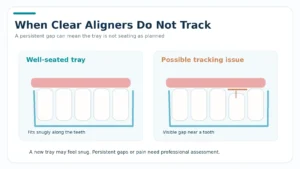
Tracking describes how closely your teeth are following the movements planned for each aligner. Poor tracking may appear as a persistent gap between a tooth and the inside of the tray, especially around the biting edge.
Signs worth checking include:
- The tray no longer seats completely.
- A noticeable air gap remains despite proper insertion.
- One section repeatedly lifts away from the teeth.
- Attachments no longer seem to fit into their corresponding areas.
- A new aligner feels unusually difficult to insert.
Mild pressure when starting a new tray can be normal. A tray that consistently fails to seat, causes significant pain, or develops a persistent gap should be assessed.
Do not force a badly fitting tray into position or move to a new set without professional guidance.
Clear Aligner Wear Time During Your First Four Weeks
During the first few weeks, the most helpful goal is to establish a repeatable daily routine. It is common to need some adjustment time for speaking, cleaning, eating, and remembering to reinsert your aligners.
Week 1: Get Used to Wearing Aligners
New patients may notice mild pressure, additional saliva, or temporary changes in speech.
Focus on wearing the aligners for your prescribed hours while learning a simple routine for removing, cleaning, and storing them.
Keep your aligner case nearby and use a phone reminder after each meal.
Week 2: Make Your Schedule More Consistent
By the second week, you may find that removing and reinserting the trays feels more natural.
Review how much time you spend eating and drinking. If you frequently forget to reinsert your aligners, try setting a timer whenever you remove them.
Weeks 3–4: Check Your Habits and Fit
As you move through your early aligner sets, continue monitoring whether each tray seats properly.
Do not assume that feeling more comfortable means you can reduce wear time.
Preventive dental care remains important during orthodontic treatment. If you’re unsure about how often to schedule cleanings, ask your dentist to recommend an interval based on your oral health.
What Should You Do If Your Aligners Feel Too Tight?
Mild tightness when starting a new tray can be expected, but unusual pain or difficulty seating an aligner deserves attention. The correct response depends on whether the tray fits fully and whether you have followed the prescribed wear schedule.
A new aligner may feel snug because it is designed to guide the teeth toward their next planned position.
However, if you have been wearing aligners less than instructed, your teeth may not be ready for the next tray.
If an aligner feels unusually tight:
- Confirm that you’re using the correct tray in the correct sequence.
- Check that the tray is not cracked, distorted, or obstructed.
- Gently seat it according to your provider’s instructions.
- Look for persistent gaps or areas that lift away.
- Contact your provider if the tray will not seat properly or causes significant discomfort.
Don’t automatically advance to the next aligner or extend the current tray’s wear period without advice.
Your dentist may recommend a modified schedule after evaluating the fit.
How Can Parents Help Teens Wear Their Aligners Consistently?
Teenagers need the same consistent, prescribed wear schedule because aligners depend on sustained contact with the teeth to achieve planned movement. Supportive routines and reminders are generally more useful than constant criticism.
Parents can help by:
- Encouraging a consistent schedule for school meals and snacks.
- Providing a protective case to prevent lost aligners.
- Setting phone reminders after lunch and dinner.
- Checking that aligners are worn before bedtime.
- Discussing difficulties with the treating dental professional.
- Using an approved wear-time tracking app when appropriate.
If a teen repeatedly removes the trays because of discomfort, determine the reason rather than treating it only as a discipline issue.
The provider may need to check the fit, attachments, or treatment instructions.
How Can Busy Professionals and Frequent Snackers Meet Their Wear-Time Goal?
Planning meals and using reminders can help people with busy schedules meet their prescribed wear target. The objective is to reduce unnecessary removal time without sacrificing nutrition or oral hygiene.
Long meetings, coffee breaks, client lunches, and frequent snacks can make aligner routines feel complicated.
Consider these approaches:
- Schedule regular meals rather than grazing continuously.
- Combine a snack with a planned meal when convenient.
- Keep your aligner case and oral-care essentials accessible.
- Use a timer every time you remove your trays.
- Drink plain water while wearing aligners.
- Reinsert aligners promptly after eating and completing oral hygiene.
You do not need to rush meals excessively or skip food to satisfy a timer.
Instead, identify where you lose time unnecessarily. For many people, forgetting the aligners on a desk or leaving them out while working is easier to correct than changing meal duration.
How to Build a Simple 22-Hour Invisalign Routine
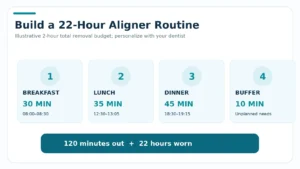
For someone prescribed 22 hours of daily wear, a practical approach is to divide the two-hour removal allowance among breakfast, lunch, and dinner. The following is an illustrative schedule, not a required meal plan.
Example Daily Removal Schedule
| Activity | Aligner removal time |
| Breakfast and cleaning | 30 minutes |
| Lunch and cleaning | 35 minutes |
| Dinner and cleaning | 45 minutes |
| Extra buffer | 10 minutes |
| Total time out | 120 minutes |
| Total time worn | 22 hours |
This example allows some flexibility while preserving the prescribed wear period.
You can distribute the time differently if your eating schedule requires it.
The important point is to measure your total removal time rather than assuming that a short break cannot affect your daily target.
Three Habits That Make the Routine Easier
Start a timer when the aligners come out. A phone timer helps distinguish a planned 30-minute break from an unplanned two-hour break.
Always use the same storage case. Keeping your aligners in a case reduces the chance that they will be forgotten or accidentally discarded.
Check your total time each evening. A quick review helps you recognize patterns before they become recurring problems.
Left Your Aligners Out for Five Hours? Here’s What to Do
If your aligners have been out for five hours, reinsert the current trays as soon as practical after cleaning your teeth and check whether they still fit correctly. One extended break does not automatically require a new tray or treatment restart.
Follow these steps:
- Clean your mouth and current aligners. Do this before reinserting them.
- Reinsert the current trays gently. Do not force them if they will not seat or cause significant pain.
- Check the fit. Look for unusual gaps, lifting edges, or discomfort.
- Return to your prescribed wear schedule. Avoid additional unnecessary removal.
- Contact your dentist if needed. Ask for advice if the fit has changed, symptoms are unusual, or missed wear becomes frequent.
Do not try to compensate by wearing two aligners together, moving ahead to a newer tray, or deciding independently to add extra days to the current aligner.
Your provider may recommend keeping the current tray longer in some circumstances, but that decision depends on your treatment plan and whether your teeth are tracking.
How to Keep Your Teeth and Gums Healthy While Wearing Aligners
Clear aligners make it possible to remove the trays for brushing and flossing, but good oral hygiene remains essential. Keeping teeth and gums clean helps reduce the risk of plaque-related problems during treatment.
The American Dental Association’s brushing guidance recommends brushing twice daily with fluoride toothpaste and cleaning between the teeth once daily.
During aligner treatment:
- Brush your teeth regularly and clean them after meals when practical, following your provider’s instructions.
- Floss daily to remove plaque between teeth.
- Rinse and clean aligners according to the manufacturer’s instructions.
- Avoid placing dirty trays back over food debris.
- Use cool or lukewarm water rather than hot water to clean the trays.
- Maintain regular dental examinations and professional cleanings.
What If Your Gums Bleed When Brushing?
Occasional irritation can have different causes, but persistent bleeding should not be ignored. If your gums bleed when brushing, consult your dentist to evaluate plaque accumulation, gum inflammation, or other possible causes.
Some patients may need periodontal care beyond routine preventive cleaning.
Understanding deep cleaning vs regular cleaning may help clarify the difference between ordinary maintenance and treatment for periodontal disease.
Do not stop cleaning the affected area entirely without professional advice.
When Should You Call Your Dentist About Clear Aligner Wear?
Contact your treating dentist or orthodontist if your aligners no longer fit properly, pain persists or worsens, or your gums develop concerning symptoms. Early assessment can help identify problems before you advance to additional trays.
Arrange a professional evaluation if you notice:
- A tray that will not seat completely.
- Persistent gaps between the teeth and aligner.
- Severe or worsening pain rather than temporary pressure.
- Bleeding, swelling, or significant gum irritation.
- A cracked, distorted, or missing aligner.
- Missing or damaged attachments.
- Repeated difficulty achieving your prescribed wear time.
If you have missed multiple days of wear, contact your provider before moving to a different aligner.
Get Personalized Clear Aligner Guidance in Washington, DC
If you’re experiencing tracking concerns, discomfort, or difficulty following your Invisalign routine, Kalorama Dental Arts can help you discuss the next steps.
You can book a dentist appointment to request an evaluation of your aligner fit, symptoms, or wear schedule.
You can also learn more about Invisalign treatment options.
Frequently Asked Questions About Clear Aligner Wear Time
How many hours a day should you wear clear aligners?
Invisalign recommends approximately 20–22 hours of daily wear, while the AAO generally recommends at least 22 hours for clear aligners. Follow the exact schedule prescribed by your treating dental professional.
Is wearing Invisalign for 20 hours enough?
It may be appropriate if your provider has specifically prescribed 20 hours of wear. However, patients given a 22-hour target should follow that instruction rather than routinely wearing aligners for only 20 hours.
What if I don’t wear my aligners for 22 hours?
Occasionally falling short does not automatically mean treatment has failed. However, repeated insufficient wear can affect tooth movement and cause tracking problems. Follow your prescribed schedule and consult your provider if the trays stop fitting correctly.
Do I have to wear clear aligners overnight?
Yes. Overnight wear is normally included in the prescribed 20–22-hour daily Invisalign schedule. Sleeping without the aligners can significantly reduce daily wear time.
Can I wear an aligner for extra days if I forget to wear it?
Your dentist may sometimes recommend extending the current aligner period, but you should not change the treatment schedule independently. Contact your provider if you have missed substantial wear time or notice poor fit.
Final Thoughts: Make Consistent Wear Part of Your Routine
Knowing how long to wear Invisalign per day is an important part of managing clear-aligner treatment.
The usual recommendation is 20–22 hours daily, with many treatment plans calling for at least 22 hours. Wearing aligners while sleeping, planning meals, and keeping track of removal time can make that goal more manageable.
If you occasionally forget to reinsert your trays, return to your prescribed routine and check the fit. If missed wear becomes frequent or your aligners stop tracking properly, seek professional advice rather than changing trays or treatment timing yourself.
For personalized guidance about clear-aligner care, fit, or progress, contact Kalorama Dental Arts in Washington, DC.
Medical disclaimer: This article provides general educational information and is not a substitute for individualized dental care. Aligner wear schedules, tray changes, and management of tracking problems depend on your treatment plan. Follow your dentist’s instructions. Clinical review by Dr. Habib S. Mitri is required before publication.