
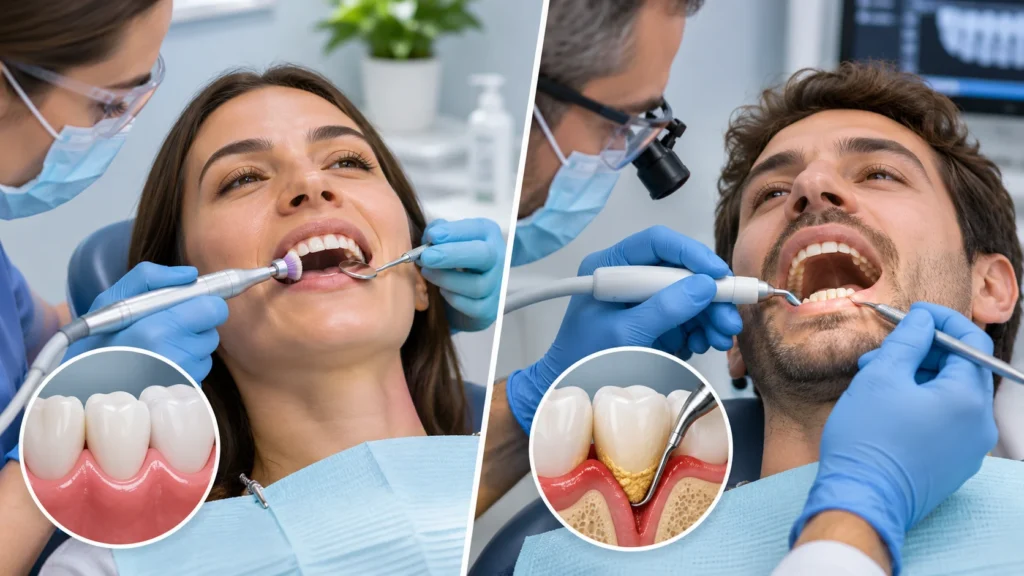
If your dentist recommends a “deep cleaning” when you expected a routine visit, you may wonder whether the extra treatment is really necessary. The difference between deep cleaning vs regular cleaning is not simply how thoroughly someone cleans your teeth. A regular cleaning generally supports prevention in a healthy or appropriately maintained mouth. Deep cleaning – usually called scaling and root planing – is a treatment used when a dentist diagnoses periodontal disease affecting the tissues that support your teeth.
The right choice depends on an examination, gum measurements, medical history and sometimes dental X-rays – not on how long it has been since your last appointment alone. Here is how the procedures compare, what they feel like, why costs vary and what to ask before deciding.
Deep Cleaning vs. Regular Cleaning: The Key Differences
| Regular dental cleaning (prophylaxis) | Deep cleaning (scaling and root planing) |
| Typically preventive care for teeth and gums without periodontitis requiring active therapy | Periodontal treatment for diagnosed disease involving deeper deposits and affected root surfaces |
| Removes plaque and tartar primarily around accessible tooth surfaces and the gumline | Removes plaque and tartar above and below the gumline and addresses affected root surfaces |
| Often completed in one appointment | May be divided into sections or multiple appointments |
| Usually little discomfort, though sensitivity varies | Local anesthetic may be used; temporary tenderness or sensitivity may follow |
| Followed by routine hygiene and risk-based recall | Followed by reassessment and, where indicated, periodontal maintenance |
The American Dental Association describes scaling and root planning as a deep cleaning below the gumline used to treat gum disease. A dentist must determine which procedure fits your actual findings.
What Happens During a Regular Dental Cleaning?
A routine professional cleaning – often called prophylaxis – helps remove hardened tartar and soft plaque that brushing and flossing may leave behind. The dental professional may scale the tooth surfaces, polish as appropriate and review your home-care habits. A dental exam is a separate assessment of oral health; it may take place at the same visit but is not identical to the cleaning.
Who usually needs a regular cleaning?
A patient whose examination does not show periodontitis requiring active treatment may receive a routine cleaning. Your dentist also considers gingival inflammation, calculus, previous periodontal treatment and your risk factors when planning care. A long gap between visits does not automatically mean you need scaling and root planing.
Does a regular cleaning remove plaque below the gums?
Routine scaling can address deposits near the gumline, but it is not a substitute for the targeted treatment of deeper periodontal pockets and root surfaces when periodontitis has been diagnosed. The distinction is the condition being treated – not simply whether a tool touches a small area under the gum.

What Is Deep Cleaning for Teeth?
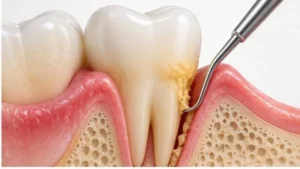
“Deep cleaning” usually means scaling and root planing (SRP), a nonsurgical treatment for periodontitis. Bacterial deposits can accumulate in periodontal pockets, where they are harder to remove by brushing alone. If these deposits and inflammation are left untreated, the tissues and bone supporting teeth can be damaged. SRP aims to disrupt and remove deposits on affected tooth and root surfaces so gum inflammation can improve.
Step 1: Scaling
Using hand instruments or ultrasonic equipment, the dental professional removes plaque and calculus from the affected tooth surfaces, including beneath the gumline when indicated.
Step 2: Root planing
The dental professional carefully instruments affected root surfaces to remove remaining deposits and contaminated surface material as clinically appropriate. Your dentist may recommend local anesthetic for comfort. Treatment can require more than one visit depending on its extent.
Step 3: Reassessment and maintenance
After healing, your dentist may check bleeding, periodontal pocket depths and other signs of improvement. Some people need further treatment or referral to a periodontist. Periodontal maintenance appointments are different from routine prophylaxis and their frequency is based on ongoing risk and clinical response.
How Do Dentists Decide Whether You Need Deep Cleaning?
Bleeding gums, bad breath and visible tartar are reasons to seek an evaluation, but none proves that scaling and root planing is needed. A diagnosis is based on a combination of findings.
Gum pocket measurements and bleeding on probing
The dental professional uses a small periodontal probe to measure the space around each tooth and may record bleeding or recession. The pattern and depth of measurements, together with attachment levels, help explain whether periodontal tissues are healthy or diseased.
Bone levels and dental X-rays
When appropriate, X-rays help evaluate support around the teeth. Your dentist may use them with the clinical examination to assess signs of periodontal bone loss. Not every patient needs the same imaging.
Why gingivitis does not always mean scaling and root planning
Gingivitis is gum inflammation without the attachment loss associated with periodontitis. A person with gingivitis may need improved home care, professional cleaning or a different gingival treatment; SRP is not automatically appropriate. In fact, ADA coding guidance distinguishes periodontal SRP from scaling provided for generalized gingival inflammation without attachment loss.
Is Deep Cleaning Painful? What About Recovery?
Some people feel pressure or vibration during treatment. When deeper areas are treated, local anesthetic may be offered. After SRP, temporary tenderness, gum bleeding or tooth sensitivity can occur. Your dentist should explain what is typical for your situation and whether an additional visit is needed.
- Follow the dental team’s specific aftercare instructions, especially if you received local anesthetic.
- Brush gently with a soft-bristled toothbrush and clean between teeth as advised; avoid stopping home care simply because the gums are sensitive.
- Contact your dental office if pain, swelling or bleeding worsens or does not improve as expected.
- Seek urgent medical care for significant facial swelling with trouble breathing or swallowing, uncontrolled bleeding or serious illness.
Deep Cleaning Teeth Cost vs. Regular Cleaning Cost
Deep cleaning is often more expensive than routine cleaning because it is therapeutic periodontal treatment, may involve more chair time, and may be billed by the number of affected teeth or quadrants. But there is no single reliable price applicable to every Washington, DC patient. Costs depend on the diagnosis, how many areas require treatment, examination and imaging needs, the office and your benefits.
Why a treatment estimate can include multiple line items
An estimate may separate the evaluation, X-rays, scaling and root planing by quadrant, and future periodontal maintenance. You should be able to request an itemized written treatment plan with the recommended procedures, their reasons and expected patient responsibility.
Does dental insurance cover deep cleaning?
Many dental plans treat preventive prophylaxis differently from periodontal therapy. Coverage can depend on plan type, deductibles, waiting periods, clinical documentation, frequency limits and whether the provider participates in the network. Do not assume a cleaning is “100% covered” or that SRP is excluded. Ask the office to verify current plan provisions and, when appropriate, request a predetermination of benefits.
Which dental billing codes should you ask about?
Dental offices may use different Current Dental Terminology (CDT) codes for adult prophylaxis, periodontal scaling and root planing, gingival inflammation treatment, and periodontal maintenance. Examples include D1110 (adult prophylaxis), D4341/D4342 (SRP by quadrant and number of teeth), D4346 (certain cases of generalized gingival inflammation), and D4910 (periodontal maintenance). These are not interchangeable. Only your dental professional can assign appropriate codes based on the documented care.
How to Know Whether a Deep Cleaning Recommendation Makes Sense
It is reasonable to ask questions, especially when the treatment differs from what you expected. A good explanation should connect the recommendation to your examination findings – not pressure you into accepting a procedure without understanding it.
- What did my gum measurements and examination show?
- Is the diagnosis gingivitis or periodontitis? Is there evidence of attachment or bone loss?
- Which teeth or quadrants need scaling and root planing, and why?
- Would a regular cleaning address the problem, or what would it leave untreated?
- What are the alternatives, risks, expected benefits and follow-up schedule?
- Can I review an itemized estimate and my insurance benefits before treatment?
If you remain unsure, requesting copies of your periodontal chart and relevant X-rays for a second opinion can help. A second opinion is appropriate when you need clarity – not because deep cleaning is inherently unnecessary.

What Happens if You Skip a Recommended Deep Cleaning?
If SRP is indicated for active periodontitis, delaying treatment may allow periodontal inflammation and supporting-tissue damage to progress. A regular cleaning cannot always replace treatment directed at deeper periodontal deposits. Nevertheless, treatment plans must be individualized; the right response to an unexpected recommendation is to understand the clinical evidence rather than assume either that all deep cleanings are essential or that they are always upselling.
What Can You Do at Home to Protect Your Gums?
Good oral hygiene supports both routine care and periodontal therapy, but home remedies do not remove hardened calculus or replace professional treatment of established periodontitis.
- Brush twice daily using fluoride toothpaste and a soft brush with gentle technique.
- Clean between teeth every day with floss or an interdental tool suited to your mouth.
- If you smoke or use tobacco, ask for help quitting; tobacco increases periodontal risk.
- Manage relevant health conditions, including diabetes, with your medical team.
- Follow the recall or periodontal maintenance schedule recommended after examination.

Schedule a Dental Evaluation in Washington, DC
If you have bleeding gums, persistent bad breath, gum recession or concerns about a recommended deep cleaning, a dental examination can help clarify your next step. At Kalorama Dental Arts in Washington, DC, Dr. Habib S. Mitri emphasizes attentive, personalized dental care and explaining findings to patients. Contact the office to discuss an appointment and ask which periodontal assessments and treatments are currently offered.
Request an appointment: https://kaloramadental.com/contact-us/
Learn about Kalorama Dental Arts: https://kaloramadental.com/
Practice-specific verification required: confirm whether scaling and root planning and periodontal maintenance are provided at Kalorama Dental Arts or referred to a specialist before describing them as in-office services.
Frequently Asked Questions
Is deep cleaning the same as a normal teeth cleaning?
No. A routine cleaning supports prevention; scaling and root planning is periodontal treatment for disease affecting deeper tooth and root surfaces. The recommendation depends on your clinical findings.
Is a dental deep cleaning worth it?
When a dentist diagnoses periodontitis and recommends SRP based on examination findings, it can be an important first nonsurgical treatment. Ask about expected benefits, risks and alternatives before proceeding.
Can a regular cleaning treat gum disease?
A professional cleaning and improved home care can help address gingivitis, but established periodontitis may need treatment below the gumline. A dentist must distinguish between the two conditions.
How often do you need deep cleaning for teeth?
SRP is not usually a routine procedure repeated on a fixed six-month schedule. After treatment, a patient may need periodontal maintenance at risk-based intervals; further therapy depends on reassessment findings.
Does insurance cover scaling and root planning?
Some dental plans cover part of the cost if eligibility and documentation requirements are met. Benefits vary by plan, affected teeth and frequency limitations. Ask for an estimate specific to your coverage.
Can I get a second opinion before deep cleaning?
Yes. Ask for your periodontal chart, relevant imaging and explanation of the diagnosis. Another dentist can review the findings and discuss reasonable treatment options.