
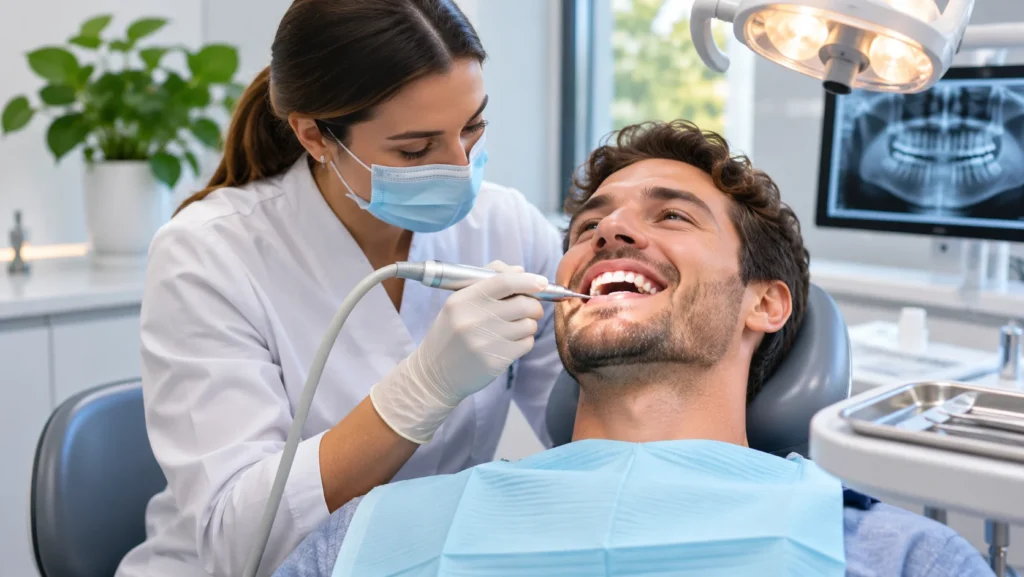
How often should you get a dental cleaning? For many adults, a professional cleaning around every six months is a familiar routine. But six months is not a universal rule. The right schedule depends on your gum health, cavity risk, medical history, home-care habits, and what your dentist finds during an examination. Some people need closer monitoring, while others may be advised on a different interval.
If you are due for a checkup – or it has been years since your last visit – understanding the difference between a routine cleaning and treatment for gum disease can help you book the right appointment. At Kalorama Dental Arts in Washington, DC, Dr. Habib S. Mitri emphasizes personal attention and clear explanations of treatment options.
Ready to discuss a dental cleaning? Contact Kalorama Dental Arts to request an appointment.
The Short Answer: Do You Really Need Dental Cleaning Every Six Months?
Twice-yearly visits are a common preventive-care pattern, but there is no fixed cleaning interval that fits every patient. The American Dental Association (ADA) explains that some people need to see a dentist once or twice a year, while others need more frequent visits. A dentist should recommend a schedule based on individual needs – not just a calendar rule. [1]
When a six-month schedule may make sense
For someone with generally healthy gums, manageable plaque buildup, and no pressing oral-health concerns, a six-month cleaning schedule may be appropriate. Regular visits allow your dental team to remove hardened deposits, review daily cleaning techniques, and identify changes before they become more difficult to address.
When a different schedule may be appropriate
People with a history of periodontitis, recurring inflammation, heavy tartar buildup, or other risk factors may be advised to return sooner. Others with consistently low disease risk may receive individualized recommendations. Examination intervals and cleaning intervals are related, but they are not necessarily identical.
What Happens During a Professional Dental Cleaning?
A routine professional cleaning – sometimes called prophylaxis – removes plaque and tartar from accessible tooth surfaces and helps manage surface staining. It complements, rather than replaces, daily brushing and cleaning between teeth.
Plaque and tartar removal
Plaque is a soft bacterial film that accumulates on teeth. If plaque is not removed thoroughly, it can harden into tartar (calculus), which cannot be reliably removed with a toothbrush. A dental professional uses appropriate instruments to clean these deposits.
Polishing and personalized prevention
Polishing may help remove certain external stains. Your visit may also include guidance on brushing, flossing or interdental brushes, fluoride, and areas that need more attention at home. Not every appointment involves exactly the same steps; the care provided should reflect your oral-health findings.
A cleaning is not the same as a dental examination
A dental examination evaluates your teeth, gums, bite, and other oral tissues and may include imaging when clinically indicated. Cleaning focuses on removing deposits. These services may happen during one visit but can be billed separately. For more detail, see our comparison of dental exams and cleanings when that article is live on the site.
Who May Need Dental Cleanings More Often?
Cleaning frequency is individualized. The following circumstances may lead your dentist to recommend closer follow-up, additional preventive care, or periodontal treatment.
Patients with gum disease or a history of periodontitis
If you have been treated for periodontitis, your dentist may recommend periodontal maintenance rather than routine prophylaxis. The ADA notes that patients who have received periodontal treatment may benefit from more frequent follow-up, sometimes every three to six months, based on their circumstances. [2]
People who smoke or use tobacco
Tobacco use is associated with periodontal problems and may complicate healing. Your dentist may monitor gum health more closely and discuss ways to reduce risk. An increased visit frequency is not automatic; it depends on the examination findings.
People with diabetes or other conditions affecting oral health
Poorly controlled diabetes can increase susceptibility to periodontal disease. Inform your dentist about medical conditions and medications so they can assess oral-health risks and coordinate care where appropriate. Pregnancy can also affect gum inflammation, but pregnancy itself does not mean everyone needs a fixed three-month cleaning schedule.
Patients who accumulate tartar quickly or have recurring inflammation
Bleeding gums, persistent bad breath, visible deposits, and repeated cavities are reasons to ask for an assessment. These symptoms do not prove that you need more frequent routine cleanings – or that you need deep cleaning – but they should not be ignored.
Routine Cleaning vs. Deep Cleaning: What Is the Difference?
A routine cleaning and scaling and root planing serve different purposes. “Deep cleaning” is a common term for scaling and root planing, a treatment used for certain cases of periodontal disease, not simply a stronger version of a routine cleaning.
| Factor | Routine cleaning | Scaling and root planing |
| Typical purpose | Preventive removal of plaque/tartar and surface stains | Treat deposits and inflammation below the gumline when clinically indicated |
| Who needs it | Patients for whom preventive cleaning is appropriate | Patients diagnosed with periodontal disease requiring nonsurgical therapy |
| Follow-up | Individualized preventive schedule | Reassessment and possibly periodontal maintenance |
| Billing | Preventive cleaning code may apply | Separate periodontal treatment codes may apply |
How often do you need deep cleaning for teeth?
Scaling and root planing is generally prescribed according to disease findings, not repeated every few months as routine maintenance. After treatment, some patients transition to periodontal maintenance visits at intervals determined by the dentist. Maintenance is ongoing preventive and monitoring care; it is distinct from repeating the initial deep-cleaning procedure. [2, 3]
How Do You Know It Is Time to Schedule a Cleaning?
If your dentist has already advised a recall date, use that as your starting point. Consider contacting the office sooner if you notice these changes:
- Gums that bleed repeatedly while brushing or flossing
- Persistent bad breath or a bad taste that does not improve
- New tooth sensitivity, discomfort, or visible tartar buildup
- Swollen, tender, or receding gums
- A loose tooth or a change in the way your teeth fit together
Do not wait for your next routine cleaning if you have significant pain, a dental injury, or new swelling. Rapidly worsening swelling, fever with facial swelling, trouble breathing or swallowing, or uncontrolled bleeding needs urgent assessment and sometimes emergency medical care.
What If You Have Not Had a Dental Cleaning in Years?
If you have missed dental visits for one, three, or even more years, the next useful step is an examination – not assuming that you will need extensive treatment. Some patients need a routine cleaning; others may need imaging, periodontal charting, or additional care based on their findings.
What to expect at your return visit
Be prepared to discuss your dental history, medications, oral-care habits, insurance questions, and any concerns such as bleeding gums or sensitivity. The dentist may recommend an examination before selecting the appropriate type of cleaning. If more involved treatment is needed, ask for an explanation and a written estimate before proceeding.
Will the dental office judge you for waiting?
A dental visit should be about understanding your current oral health and making a realistic plan – not judging the time since your last appointment. If dental anxiety or cost kept you away, say so when booking. It may help the team explain the process and discuss options in advance.
How Much Does a Dental Cleaning Cost Without Insurance?
The cost of a professional teeth cleaning in Washington, DC can vary with the practice, whether an exam and X-rays are included, the type of cleaning required, and the patient oral-health needs. A routine preventive cleaning is not priced or coded the same way as periodontal treatment, so an advertised “cleaning special” may not represent the total cost of a new-patient visit.
Questions to ask when requesting a price estimate
- Does the estimate cover a cleaning only, or also an exam and X-rays?
- Is the quote for routine prophylaxis or periodontal treatment?
- What changes if the examination indicates gum disease?
- Are there separate new-patient consultation or diagnostic charges?
- Can I receive a written estimate before treatment?
Kalorama Dental Arts has not provided a verified public price list for this article, so no specific cleaning prices are stated. Contact the office for current estimates and any available payment information.
Does Dental Insurance Cover Two Cleanings a Year?
Many dental benefits plans include preventive cleanings, sometimes twice per plan year, but frequency limits, eligibility, network status, waiting periods, and patient responsibility vary. A plan that covers two cleanings does not necessarily mean a clinician recommends two – and some patients need more care than their plan covers.
The ADA has recommended that dental benefit designs avoid restrictive frequency limitations and, when limits exist, provide preventive-service coverage at least twice in a plan or calendar year. That is a recommendation about benefit design, not a guarantee that every insurer follows it. [4]
How to verify benefits before booking
Ask your insurer and the dental office which services and procedure codes are covered, whether there is a deductible or copay, and whether periodontal maintenance is treated differently from routine cleaning. If you are paying out of pocket, ask for an itemized estimate rather than relying on a generic “cleaning cost near me” figure.
How to Keep Teeth Cleaner Between Appointments
Regular professional visits work best alongside consistent home care. The ADA advises brushing twice daily with fluoride toothpaste and cleaning between teeth daily, with techniques tailored to individual needs. [5]
- Brush gently for two minutes twice daily using fluoride toothpaste.
- Clean between teeth every day with floss or an appropriate interdental aid.
- Limit frequent sugary snacks and drinks; drink water regularly.
- Avoid tobacco and discuss quitting support with your healthcare team.
- Follow any personalized instructions for restorations, aligners, implants, or gum disease.
Schedule a Dental Cleaning in Washington, DC
If you are searching for professional teeth cleaning in Washington, DC, a local dental appointment can help you understand whether you need a routine cleaning, a comprehensive exam, or additional gum care. At Kalorama Dental Arts, Dr. Mitri personally performs examinations and cleanings according to the practice information supplied for this article.
Whether you are maintaining a preventive routine or returning after a long break, contact the practice to ask about available appointments, insurance questions, and the next appropriate step. Availability and coverage should be confirmed directly with the office.
Explore Kalorama Dental Arts or request a dental appointment in Washington, DC.
Frequently Asked Questions About Dental Cleaning Frequency
Do I need a teeth cleaning every six months?
Not always. Six-month cleanings are common, but the best interval depends on your individual risk of cavities and gum disease. Ask your dentist to recommend a schedule based on your examination and dental history.
Can I get a dental cleaning once a year?
Some people with low oral-disease risk may be advised on a longer interval, but annual cleaning is not automatically appropriate for everyone. Do not change a prescribed follow-up schedule without discussing your health needs with your dentist.
Is a cleaning every three or four months necessary for gum disease?
Some patients with a history of periodontitis benefit from periodontal maintenance every three to four months. The frequency should be individualized according to the severity and stability of disease, home care, and medical risk factors. [2, 3]
Will my insurance pay for a cleaning if I already had two this year?
Possibly, but it depends on your plan and the type of service. Some policies have annual frequency limits, and periodontal maintenance may be categorized differently. Verify benefits and request a cost estimate before booking.
Is a deep cleaning the same as a regular cleaning?
No. Routine cleaning supports prevention; scaling and root planing is periodontal treatment used for specific clinical findings. Your dentist should explain why either is indicated.
Should I schedule a cleaning if my gums bleed?
Repeated bleeding is a reason to request an evaluation. Gingivitis is one possible cause, but the right care depends on an examination. A routine cleaning alone may not address more advanced periodontal problems.
A Simple Next Step for Your Smile
Rather than asking only whether six months have passed, ask whether your teeth and gums are getting the care they need. A personalized schedule can help you maintain oral health while avoiding both unnecessary visits and delays in treatment.
To plan your next visit, contact Kalorama Dental Arts in Washington, DC.
Medical disclaimer: This article provides general dental education and is not a diagnosis or a substitute for individualized professional advice.